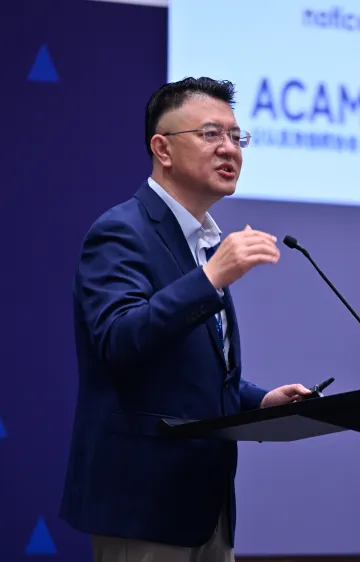


Amanda Wolf: Creating spaces for people to speak

_0.png)
In celebration of International Women’s Day, ACAMS Today sat down with Amanda Wolf of the City of London Police, who brings a broad and diverse policing background, having served in three forces and building experience across public order, surveillance and complex financial investigations. She has specialized in asset recovery and confiscation, using Proceeds of Crime Act 2002 (POCA) legislation to strengthen crime prevention and support front-line policing. Her time in professional standards saw her enhance governance and embed strong ethical and compliance frameworks.
Moving into national cybercrime response, Wolf became the PROTECT lead, working closely with partners to shape governance, drive improvement and reduce harm to victims. She helped design business incident reporting processes, established 24/7 triagency live incident response mechanisms and coordinated disruption activity across digital platforms.
Wolf is a passionate champion for diversity and development. She delivers the “Leading with Impact” program, supporting female officers and staff in their personal and professional development. She actively promotes fair and transparent opportunities, working with professional networks to ensure inclusive decision-making. As a respected senior female leader, she mentors and sponsors colleagues across policing, offering guidance, encouragement and constructive challenge.
Today, Wolf leads the U.K.’s fight against fraud, driving intelligence-sharing, prevention and enforcement. As head of the new National Report Fraud Service, she is shaping its strategy, operational delivery and partnerships to enhance victim experience and strengthen the U.K.’s overall fraud response.
ACAMS Today (AT): In an industry focused on protecting the financial system, how do you see “Give to Gain,” this year’s theme for International Women’s Day, contributing to stronger and more effective anti‑financial crime (AFC) outcomes?
Amanda Wolf (AW): “Give to Gain” resonates strongly within financial crime and fraud prevention, and it aligns closely with the idea that every report counts. Fraud and cybercrime are often misunderstood and underestimated, so building a sense of shared responsibility and community around reporting is incredibly important.
For me, “Give to Gain" is about recognizing that even when a report doesn’t lead to a criminal justice outcome, the information still has real value. Every report helps prevent further harm, protects others and improves our understanding of how these crimes work. That small act of giving—your time, your experience or your information—creates meaningful systemwide benefits and helps people feel confident that their contribution makes a difference, even if the outcome isn’t what they initially expect.
When people feel empowered to report, even if they have lost nothing or don’t want formal action taken, we can close the underreporting gap and better understand the threat. Reports can lead to investigations, disruption activity, proactive intelligence development and smarter crime prevention design. They also strengthen collaboration across law enforcement (LE) and industry, nationally and internationally.
Ultimately, “Give to Gain” breaks down barriers, builds understanding and reinforces that everyone has a role in tackling fraud. The more people share, the more we can do—and the better we can protect our communities.
AT: As head of Report Fraud operations, how do you see inclusion and diverse perspectives strengthening the U.K.’s collective response to fraud, particularly as criminals adopt more sophisticated methods?
AW: As criminals become more sophisticated, LE must evolve just as quickly. We can only do that by bringing together a wide mix of perspectives, skills and experiences. Diversity of thinking—whether it comes from different backgrounds, professions or lived experiences—helps us spot risks and opportunities we might otherwise miss.
Within Report Fraud, our strength genuinely comes from the breadth of people involved, and that diversity is a big part of why the national service has landed so successfully. Detectives, analysts, data scientists, technical solution architects, call takers, victim advocates and industry specialists all approach problems differently. When you combine those viewpoints, you get smarter questions, faster innovation and a service shaped around the needs of the people we’re here to support. It doesn’t necessarily make things easier—in fact, it can make things more challenging at times—and that’s absolutely OK. Challenge is how we grow.
A diverse workforce helps us understand victims more deeply, design accessible reporting systems and respond in ways that feel supportive and trusted. It also drives continuous improvement, pushing us to think differently and adapt to the pace at which fraudsters evolve. Ultimately, inclusion builds a national fraud response that is agile, collaborative and genuinely effective. The more voices we bring in, the stronger we become.
AT: Reflecting on your own journey, what personal experience or lesson has most shaped your commitment to public service and protecting citizens from fraud?
AW: One lesson that has shaped my commitment to public service—and especially to protecting people from fraud—comes from seeing vulnerability across every corner of policing. I’ve served in three forces and worked everywhere from front-line response to neighborhood engagement, serious misconduct investigations, cybercrime and complex financial work under POCA. In every role, I’ve met people who felt embarrassed, isolated or unsure about coming forward when something went wrong. That feeling stays with you.
Fraud victims often blame themselves, even though the criminals are highly organized, increasingly sophisticated and prey on vulnerability. Supporting people in those moments and seeing how deeply it can affect their confidence and well-being, is what made me realize how important it is to create services that are supportive, accessible and human.
Being a mom has only strengthened that perspective. With family spread across the world, I’m very aware that anyone—busy parents, elderly relatives, young people starting out—can all be caught out by these crimes. It makes it feel personal.
That combination of professional experience and real-life empathy drives me. It’s why I’m so committed to building a national response where people feel believed, protected and empowered to report. Because when someone tells us what’s happened, we can prevent harm not just to them, but to countless others.
AT: Can you share a moment in your AFC career when inclusion empowered you?
AW: A moment that really empowered me came early in my time with the Report Fraud program. I walked into a key design meeting full of incredibly talented people—commercial specialists, technical architects, data experts and program leads who had been shaping the work for years. I was new, still finding my feet and, if I’m honest, felt completely out of my depth.
I remember thinking: “What am I doing here? I don’t belong in this room.” But when I finally shared my perspective, drawing on operational policing, victim experience and the realities of response and neighborhood work, the reaction surprised me. People leaned in, asked questions and later told me that my contribution had given them clarity they didn’t have before.
That feedback genuinely boosted my confidence. Every time I spoke up, I grew a little more. It showed me that inclusion isn’t just about being in the room; it’s about being encouraged to contribute, being heard and seeing the impact of your voice. It also reminded me how important it is to pass that confidence on.
And I’ll be honest: Stepping up in a space with very few senior female voices was, and still can be, intimidating. Sometimes I do it scared or tired, with life pulling in every direction—but I do it anyway. That diverse, supportive team made me feel valued, and it shaped how I lead today: ensuring others get the same chance to grow, contribute and shine.
AT: How do you use your role to elevate diverse voices and what advice would you offer women entering the AFC field today?
AW: In my role, I see it as a responsibility, and a privilege, to elevate diverse voices. That means creating space for people to speak, especially when they’re not the loudest in the room. I actively seek out perspectives from different backgrounds, roles and lived experiences because that diversity is what strengthens our fraud response. Sometimes it’s as simple as asking someone directly for their view, giving them a platform to lead a conversation or backing them when they take a risk and try something new. Inclusion isn’t passive; you have to nurture it.
I also try to be the leader I needed earlier in my career. I share opportunities, encourage people to step into rooms they might not feel ready for and remind them that feeling nervous doesn’t mean they don’t belong. Often, the most transformative moments come when someone realizes their voice genuinely matters.
For women entering the AFC field, my biggest advice is this: Back yourself, even when you’re scared. This space needs your perspective. You don’t have to have all the answers. None of us do. Ask questions, take up space and seek out supportive networks. And remember confidence grows from doing, not waiting until you feel ready.
You deserve to be in the room and your voice will make it stronger.
AT: Outside of your professional life, what shaped who you are today?
AW: Outside of work, who I am today has been shaped by a mix of nature, nurture and the choices I’ve made along the way. I grew up in a military family, moving around constantly, which taught me adaptability and resilience from an early age. When my parents divorced, I was raised in a single parent household and that experience showed me what strength looks like in real life. It gave me a deep understanding of responsibility and the importance of standing on your own two feet.
I often say I went to the “university of life.” I didn’t follow the typical path—most of my friends settled down early, while I had my children and got married much later. Those choices took me down a completely different route, one that allowed me to grow, learn and figure myself out before stepping into family life. Losing a close friend in my teens was another turning point; it taught me about fragility, empathy and the importance of showing up for people.
Looking back, I can see moments where circumstance shaped me and moments where I shaped myself. That blend—nature, nurture and the paths we choose—has grounded me, given me perspective and made me the leader, parent and person I am today.
AT: Was there a special mentor who provided encouragement during your career?
AW: This question genuinely made me emotional to reflect on, because it highlights exactly what “Give to Gain” means to me. I’ve never had one “special mentor,” but I’ve been shaped by so many people along the way—peers, colleagues, brilliant leaders and, honestly, some not so brilliant ones too. What stayed with me isn’t their job title or how long we worked together—it’s how they made me feel.
Some leaders made me feel seen, capable and trusted. Others taught me, very clearly, the type of leader I never wanted to become. Both have shaped me. A Detective Chief Inspector in Professional Standards showed me what empathetic leadership looks like, grounding everything in humanity. Former city of London Commissioner Angela McLaren taught me the power of compassion: Work hard, be kind. And more recently, having someone like Chris Bell, service delivery director for Report Fraud, as a sounding board and mentor has been invaluable—his openness, calmness and completely different experience have helped me grow in ways I didn’t expect.
Reflecting on it all, I realize that inclusion, encouragement and kindness cost nothing, yet they stay with you for years. That’s the real “Give to Gain” lesson: It’s not always what people do—it’s how they make you feel that changes you and that’s exactly the kind of leader I try to be.
Interviewed by: Karla Monterrosa-Yancey, CAMS, editor-in-chief, ACAMS, [email protected]
Ben Bahner, CAMS, editor, ACAMS, [email protected]
ACAMS Connect: Crypto Threats, Vulnerabilities and What to Do Next
Evolving AML compliance for emerging threats
AFC in Practice: Insights from the ACAMS Global AFC Threats Report
Fraud and money laundering: Two sides of the same crime
Navigating the human perimeter in regulatory cyber resilience
AFC in Practice: How to Be a Better Financial Crime Investigator
Stablecoins at scale: Compliance priorities in a world of concentrated illicit risk
Evolving AML compliance for emerging threats
All Access: What to Know Before the Assembly Kicks Off
The hidden laundering channel: Credit card payments in Latin America
Stablecoins at scale: Compliance priorities in a world of concentrated illicit risk
AFC in Practice: ACAMS 2026 Global Threats Report